The United States remains one of the most popular study destinations in the world, hosting over a million international students each year. World-class universities, cutting-edge research facilities, flexible academic pathways, and strong global recognition make the US highly attractive for higher education. At the center of this academic mobility is the F-1 student visa, the primary non-immigrant visa for international students pursuing full-time education in the United States.
This blog provides a comprehensive overview of the US F-1 visa policy, explaining its purpose, eligibility requirements, application process, work rules, recent policy trends, and practical advice for students planning to study in the US.
1. What Is the F-1 Visa?
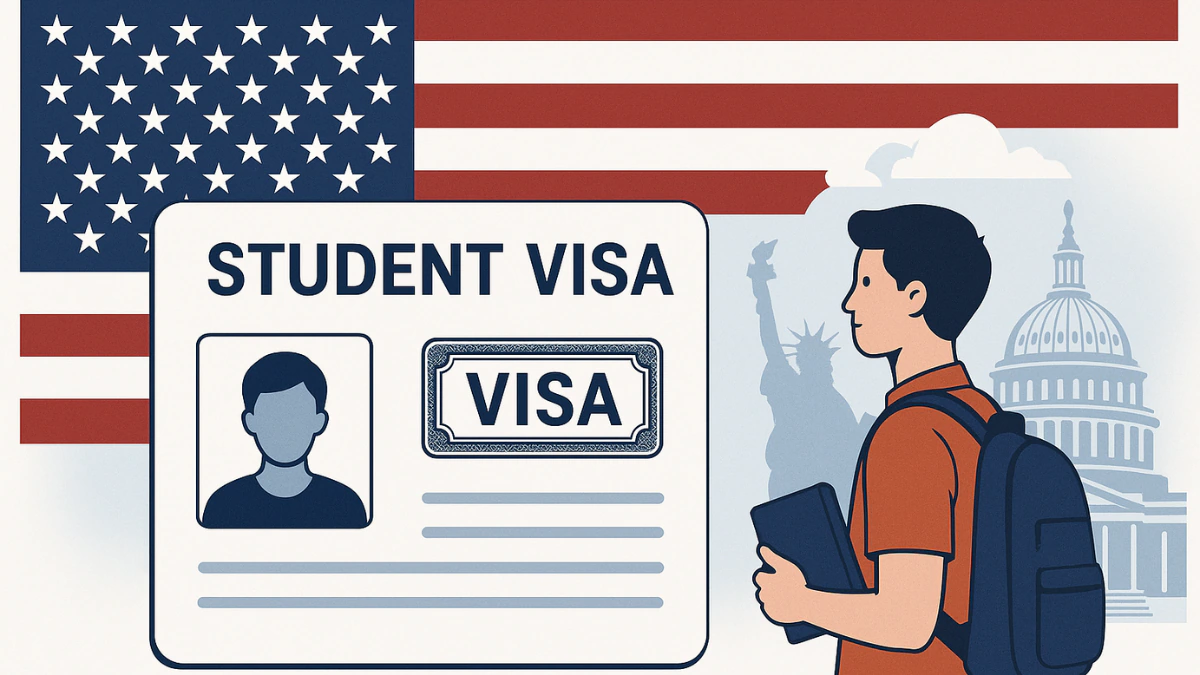
The F-1 visa is a non-immigrant student visa issued by the US Department of State to foreign nationals who wish to pursue full-time academic studies in the United States. It applies to students enrolled in:
- Universities and colleges
- High schools
- Private elementary schools
- Seminaries
- Conservatories
- Language training programs
- Other academic institutions approved by the Student and Exchange Visitor Program (SEVP)
The F-1 visa allows students to enter the US temporarily for educational purposes, with strict conditions regarding study load, employment, and length of stay.
2. Governing Authorities and Legal Framework
The F-1 visa policy is governed by multiple US agencies:
- US Department of Homeland Security (DHS) – oversees immigration enforcement
- Student and Exchange Visitor Program (SEVP) – certifies schools and monitors students
- US Immigration and Customs Enforcement (ICE) – manages the SEVIS database
- US Department of State (DOS) – issues visas through embassies and consulates
The legal foundation of the F-1 visa is outlined in the US Immigration and Nationality Act (INA) and related federal regulations.
3. SEVP-Certified Schools and Form I-20
To apply for an F-1 visa, a student must first gain admission to an SEVP-certified institution. Once accepted, the school issues Form I-20 (Certificate of Eligibility for Nonimmigrant Student Status).
The I-20 is a critical document that includes:
- Student’s personal details
- Program of study and duration
- Estimated cost of attendance
- Proof of financial capability
- SEVIS identification number
Without a valid I-20, an F-1 visa application cannot proceed.
4. Eligibility Requirements for the F-1 Visa
To qualify for an F-1 visa, applicants must demonstrate the following:
A. Academic Intent
- Acceptance into a full-time academic program
- Enrollment in a course of study leading to a degree, diploma, or certificate
B. Financial Capability
Students must prove they can cover:
- Tuition fees
- Living expenses
- Health insurance
- Other academic costs
Financial evidence may include bank statements, sponsor letters, scholarships, or assistantships.
C. English Language Proficiency
Most institutions require proof of English proficiency through exams such as:
- TOEFL
- IELTS
- Duolingo English Test
- PTE Academic
Some students may enroll in English language programs if they do not initially meet proficiency standards.
D. Non-Immigrant Intent
A key aspect of the F-1 visa is demonstrating strong ties to the home country. Applicants must convince the consular officer that they intend to return home after completing their studies.
5. The F-1 Visa Application Process
The application process generally involves the following steps:
- Receive Form I-20 from an SEVP-certified school
- Pay the SEVIS I-901 fee
- Complete Form DS-160 (Online Non-Immigrant Visa Application)
- Pay the visa application fee
- Schedule and attend a visa interview at a US embassy or consulate
- Submit biometric data and supporting documents
Visa approval is discretionary and depends on the applicant’s academic plan, financial stability, and immigration intent.
6. Duration of Stay and “D/S” Status
Unlike many visas with fixed expiration dates, F-1 students are admitted under Duration of Status (D/S). This means students may remain in the US for:
- The length of their academic program
- Plus any authorized practical training
- Plus a 60-day grace period after completion
Maintaining valid F-1 status requires continuous full-time enrollment and compliance with visa conditions.
7. Full-Time Study Requirements
F-1 students must maintain a full course load, which typically means:
- Undergraduate students: at least 12 credit hours per semester
- Graduate students: defined by the institution
- Language programs: minimum 18 hours of study per week
Reduced course loads are permitted only under specific circumstances, such as academic difficulties, medical conditions, or final semester requirements.
8. Employment Rules Under F-1 Visa Policy
Employment is one of the most regulated aspects of the F-1 visa.
A. On-Campus Employment
- Allowed up to 20 hours per week during academic sessions
- Full-time allowed during official breaks
- Must be on campus or affiliated with the institution
B. Curricular Practical Training (CPT)
CPT allows students to work off campus in roles directly related to their major:
- Must be an integral part of the curriculum
- Requires authorization from the Designated School Official (DSO)
- Can be part-time or full-time
Excessive full-time CPT may impact eligibility for Optional Practical Training (OPT).
C. Optional Practical Training (OPT)
OPT is one of the most valuable benefits of the F-1 visa:
- Pre-completion OPT: during studies
- Post-completion OPT: up to 12 months after graduation
Employment must be directly related to the student’s field of study.
STEM OPT Extension
Students with degrees in Science, Technology, Engineering, or Mathematics (STEM) may apply for a 24-month extension, allowing up to 36 months of total OPT.
9. Dependents: F-2 Visa
Spouses and unmarried children under 21 may accompany F-1 students under the F-2 visa.
F-2 dependents:
- Cannot work in the US
- May study part-time (spouses) or full-time (children)
- Must maintain valid status linked to the F-1 holder
10. Travel, Reentry, and Visa Validity
An F-1 visa is an entry document, not a status guarantee. To reenter the US, students must carry:
- Valid passport
- Valid F-1 visa stamp
- Signed Form I-20 (travel endorsement)
- Proof of continued enrollment
Students may remain in the US with an expired visa as long as they maintain valid F-1 status, but must renew the visa to reenter if they travel abroad.
11. Maintaining F-1 Status
Failure to comply with F-1 regulations can result in status termination. Common violations include:
- Unauthorized employment
- Falling below full-time enrollment
- Failure to update address information
- Staying beyond authorized period
Students out of status may need to apply for reinstatement or leave the US.
12. Recent Trends and Policy Developments
A. Digital Monitoring and SEVIS Compliance
The US has increased reliance on SEVIS data tracking, making compliance more critical than ever.
B. Remote Learning Policies
Temporary COVID-era flexibilities allowing extensive online study have largely ended. F-1 students must now maintain a significant in-person component.
C. Increased Scrutiny at Visa Interviews
Applicants from high-demand countries may face deeper questioning regarding finances, academic relevance, and post-study plans.
13. Transitioning to Work Visas
While the F-1 visa does not guarantee permanent residence, many students transition to:
- H-1B Specialty Occupation Visa
- O-1 Visa for individuals with extraordinary ability
- Employment-based green card pathways
OPT and STEM OPT often serve as a bridge to longer-term work authorization.
14. Advantages of the F-1 Visa
- Access to world-class education
- Flexible academic options
- Legal on-campus and post-study work opportunities
- Pathways to professional experience
- Global recognition of US degrees
15. Challenges and Considerations
- High cost of education and living expenses
- Strict compliance requirements
- Limited work rights compared to some other countries
- Visa interview uncertainty
Careful planning and institutional support are essential.
Conclusion
The US F-1 visa policy plays a central role in shaping international education in the United States. While it offers unmatched academic and professional opportunities, it also requires strict compliance, financial preparedness, and long-term planning.
Understanding the rules around enrollment, employment, travel, and post-study options is crucial for maintaining legal status and maximizing the benefits of studying in the US. For students who approach the process with clarity and preparation, the F-1 visa remains one of the most powerful gateways to global education and career advancement.